
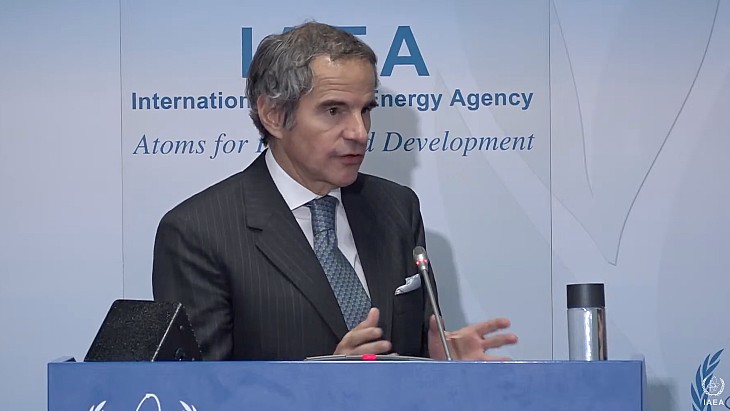
Rafael Mariano Grossi, Director General of the International Atomic Energy Agency (IAEA), explained that the ZNPP rotation through Russia, instead of the usual path via Ukraine, stemmed from a single priority: “I couldn’t jeopardize the safety of my team – political debates had no place in that call.”
Speaking to reporters during an IAEA Board of Governors meeting in Vienna, Grossi faced questions about whether this move might seem to validate Russia’s hold over Ukraine’s Zaporizhzhia plant, seized in March 2022. Since September of that year, IAEA experts have been stationed there, typically rotating every few weeks by traveling from Ukraine and crossing the tense frontline between russian and Ukrainian forces, just kilometers from the facility.
This time, however, the outgoing team lingered at the plant far beyond their scheduled stay, as earlier rotations were halted due to escalating dangers. Ukraine has voiced objections to IAEA personnel accessing the site through Russia and its occupied territories.
Grossi stressed: “This decision came down to keeping our people safe, nothing more drove it. It’s a tough spot, no doubt, but this was an exception purely about their protection. Digging deeper into motives isn’t wise.” But, he didn’t say what kind of dangers his team might face on Ukrainian territory.
He pointed to 2022, when some feared the IAEA’s involvement might signal acceptance of the occupation. “Yet, working alongside Ukraine, we’ve shown that’s not true,” he said. “Our experts’ ongoing presence not just at Zaporizhzhia, but across all Ukrainian nuclear sites at the president’s request plus our collaboration on safety, security, and even rebuilding efforts for a new nuclear framework, has been vital.”
In his opening remarks to the board, Grossi noted that since their November gathering, the IAEA has coordinated 31 shipments of equipment for nuclear safety, security, and medical needs to Ukraine. This brings the total to 108 deliveries, worth over €15.6 million (roughly $16.4 million). He added that the agency has also launched the initial stage of a program to bolster the safety and security of radioactive sources in Ukraine.